

In modern construction, ground conditions and structural integrity play a crucial role in determining the success of any project. Weak soils, underground voids, and structural deterioration can pose serious risks if not addressed effectively. One of the most reliable and versatile solutions to these challenges is cement grouting.
Cement grouting has evolved significantly over the years, incorporating advanced techniques and innovations that enhance its efficiency, precision, and effectiveness. This blog explores the key techniques and modern advancements that make cement grouting indispensable in today’s construction industry.
What is Cement Grouting?
Cement grouting is the process of injecting a cement-based slurry into soil, rock, or structural voids to improve strength, reduce permeability, and stabilize the ground or structure. Once the grout sets, it forms a solid mass that enhances load-bearing capacity and structural performance.
It is widely used in both new construction and rehabilitation projects.
Why Cement Grouting is Essential
Construction projects often encounter challenges such as:
- Weak or compressible soils
- Voids beneath foundations
- Cracks in concrete structures
- Water seepage and leakage
Cement grouting addresses these issues by strengthening the ground, sealing voids, and reinforcing structures, ensuring long-term stability and durability.
Key Cement Grouting Techniques
1. Permeation Grouting
Grout is injected into the voids of soil without disturbing its structure, improving strength and reducing permeability.
2. Compaction Grouting
A stiff grout is injected to densify loose soils and increase bearing capacity without significant displacement.
3. Jet Grouting
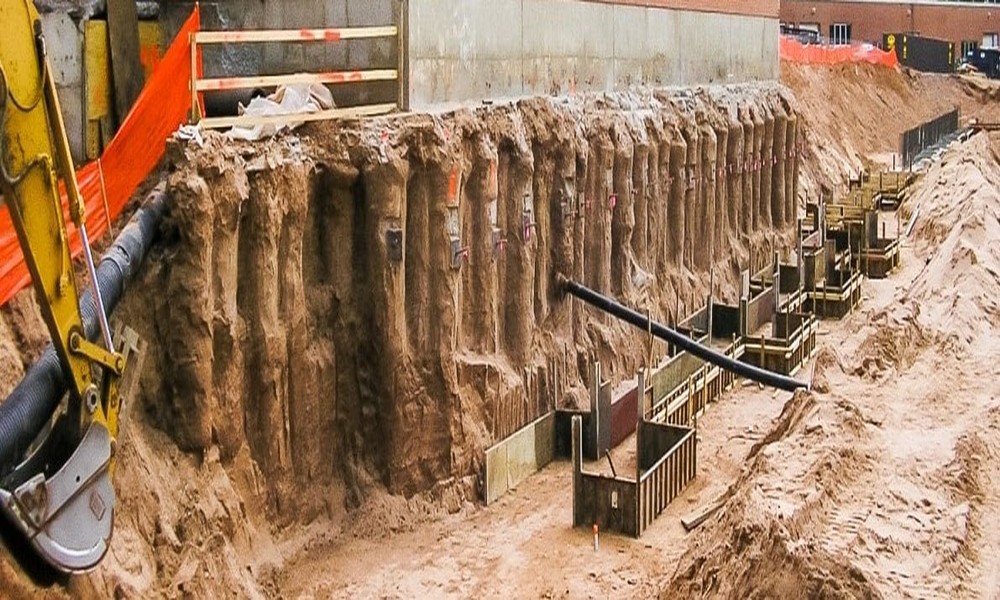
High-pressure jets mix grout with soil to form columns of stabilized ground with high strength.
4. Fracture Grouting
Grout is injected to create controlled fractures in the soil, which are then filled to improve stability.
5. Curtain Grouting
Used to create impermeable barriers that control water seepage, commonly applied in dams and tunnels.
Innovations in Modern Cement Grouting
Advanced Grout Materials
The use of microfine and ultrafine cement allows better penetration into fine soils and cracks.
Precision Injection Systems
Computer-controlled equipment ensures accurate control of pressure, volume, and flow rate.
Real-Time Monitoring
Sensors and monitoring systems track grout movement and performance during injection.
Additives and Admixtures
Chemical additives improve workability, setting time, and durability of grout.
Benefits of Modern Cement Grouting
Improved Ground Strength
Enhances the load-bearing capacity of weak soils.
Structural Reinforcement
Strengthens foundations and existing structures.
Water Control
Reduces permeability and prevents leakage.
Cost Efficiency
Often more economical than excavation or rebuilding.
Minimal Disruption
Can be applied with minimal disturbance to existing structures and surroundings.
Applications in Construction
Cement grouting is widely used in:
- Foundation stabilization
- Bridge and dam construction
- Tunnel reinforcement and waterproofing
- Repair of concrete structures
- Ground improvement for high-rise buildings
It is particularly effective in urban environments where space and access are limited.
Design Considerations
To ensure successful grouting, engineers must consider:
- Soil and site conditions
- Selection of appropriate grouting technique
- Grout mix design and properties
- Injection pressure and sequence
- Monitoring and quality control
Challenges and Best Practices
While cement grouting is highly effective, improper execution can lead to issues such as over-pressurization or incomplete penetration. Best practices include:
- Conducting detailed site investigations
- Using experienced professionals
- Employing advanced equipment and monitoring tools
- Adapting techniques based on real-time observations
Conclusion
Cement grouting is a cornerstone of modern ground improvement and structural reinforcement. With advancements in techniques and technology, it has become more precise, efficient, and adaptable than ever before.
By mastering cement grouting methods and embracing innovation, engineers can ensure safer, stronger, and more durable construction projects.
