

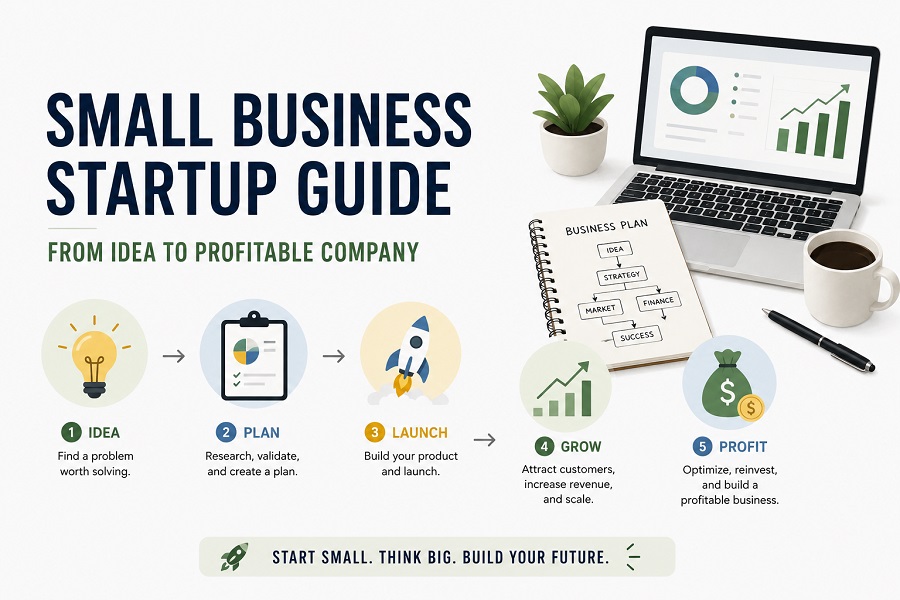
Starting a small business is one of the most exciting ways to achieve financial independence, create value, and build long-term wealth. Every successful company began as an idea, but transforming an idea into a profitable business requires planning, persistence, and strategic execution.
Many entrepreneurs fail not because their ideas are bad, but because they lack preparation, market research, financial planning, or effective marketing. Understanding the fundamentals of business development can significantly increase the chances of success.
This comprehensive guide covers every stage of launching and growing a small business, from idea generation to profitability and long-term growth.
Why Start a Small Business?
Entrepreneurship offers several advantages.
Financial Independence
Business owners have the potential to generate income beyond traditional employment.
Flexibility
Entrepreneurs often enjoy greater control over their schedules and work environments.
Personal Fulfillment
Building a successful business can provide a strong sense of achievement.
Wealth Creation
A profitable company can become a valuable long-term asset.
Solving Problems
Successful businesses address customer needs and create meaningful solutions.
Finding the Right Business Idea
Every business begins with an idea.
Identify Problems
Many successful companies solve common problems.
Ask yourself:
- What frustrations do people experience?
- What services are lacking?
- What products could be improved?
Evaluate Your Skills
Consider:
- Professional expertise
- Hobbies
- Industry experience
- Personal interests
Businesses aligned with existing skills often have higher chances of success.
Analyze Market Trends
Emerging industries may offer opportunities.
Examples include:
- Artificial intelligence
- E-commerce
- Health and wellness
- Sustainable products
- Online education
Conducting Market Research
Market research helps validate business ideas before investing significant resources.
Understand Your Target Audience
Identify:
- Age
- Income level
- Interests
- Pain points
- Buying behavior
Study Competitors
Analyze:
- Pricing
- Marketing strategies
- Product offerings
- Customer reviews
Competitor analysis reveals opportunities for differentiation.
Evaluate Demand
Questions to consider:
- Are people actively searching for this solution?
- Is the market growing?
- Can customers afford the product or service?
Creating a Business Plan
A business plan serves as a roadmap for success.
Executive Summary
Provide an overview of:
- Business concept
- Goals
- Value proposition
Company Description
Explain:
- Products or services
- Target market
- Competitive advantages
Market Analysis
Include:
- Industry overview
- Customer research
- Competitor analysis
Marketing Strategy
Describe how customers will be attracted and retained.
Financial Projections
Estimate:
- Revenue
- Expenses
- Profitability
- Cash flow
A strong business plan improves decision-making and may help secure funding.
Choosing a Business Model
The business model determines how revenue is generated.
Service-Based Businesses
Examples:
- Consulting
- Marketing agencies
- Web design
- Accounting
Product-Based Businesses
Examples:
- Physical products
- Manufacturing
- Retail stores
Subscription Businesses
Customers pay recurring fees.
Examples:
- Membership sites
- Software services
- Premium content platforms
E-Commerce
Online stores sell products directly to consumers.
Affiliate Marketing
Businesses earn commissions by promoting products.
Choose a model aligned with your goals and resources.
Legal Structure Options
Business structure affects taxes, liability, and operations.
Sole Proprietorship
Advantages:
- Simple setup
- Full control
Disadvantages:
- Personal liability
Partnership
Suitable for businesses with multiple owners.
Limited Liability Company (LLC)
Provides legal separation between personal and business assets.
Corporation
May offer benefits for larger businesses seeking investment.
Consult legal and tax professionals before making decisions.
Business Registration and Compliance
Requirements vary by location and industry.
Common steps include:
- Registering the business name
- Obtaining licenses
- Securing permits
- Understanding tax obligations
Compliance helps avoid legal issues and penalties.
Funding Your Business
Most startups require capital.
Personal Savings
Many entrepreneurs fund businesses themselves initially.
Friends and Family
Can provide early-stage support.
Bank Loans
Traditional financing option for qualified businesses.
Investors
Investors provide funding in exchange for ownership.
Crowdfunding
Online platforms allow businesses to raise capital from the public.
Grants
Certain industries and regions offer government support programs.
Building Your Brand
Branding influences customer perception.
Business Name
Choose a name that is:
- Memorable
- Relevant
- Easy to pronounce
Logo Design
A professional logo enhances credibility.
Brand Identity
Develop consistent:
- Colors
- Fonts
- Messaging
- Visual style
Brand Promise
Clearly communicate the value customers can expect.
Creating Products and Services
Customer satisfaction begins with quality offerings.
Focus on Value
Products should solve problems or improve customers’ lives.
Gather Feedback
Early customer input helps improve offerings.
Continuous Improvement
Successful businesses regularly refine products and services.
Building an Online Presence
Modern businesses need strong digital visibility.
Professional Website
A website serves as the company’s online headquarters.
Include:
- Product information
- Contact details
- Customer testimonials
- Calls to action
Search Engine Optimization (SEO)
SEO helps attract organic traffic.
Key areas include:
- Keywords
- Content quality
- Technical optimization
- Backlinks
Social Media Marketing
Build awareness through:
- YouTube
Choose platforms relevant to your audience.
Customer Acquisition Strategies
Businesses need a reliable system for attracting customers.
Content Marketing
Create valuable content that educates and engages audiences.
Examples:
- Blog posts
- Videos
- Guides
- Tutorials
Email Marketing
Build relationships and encourage repeat purchases.
Paid Advertising
Examples:
- Search ads
- Social media ads
- Display advertising
Referral Programs
Satisfied customers can become powerful advocates.
Pricing Strategies
Pricing directly affects profitability.
Cost-Plus Pricing
Add a profit margin to costs.
Competitive Pricing
Price relative to competitors.
Value-Based Pricing
Price based on perceived customer value.
Premium Pricing
Position products as high-end offerings.
The best strategy depends on the market and business goals.
Financial Management
Financial discipline is critical for long-term success.
Track Revenue and Expenses
Maintain accurate records.
Monitor Cash Flow
Cash flow problems are a common cause of business failure.
Create Budgets
Budgeting improves planning and decision-making.
Separate Business and Personal Finances
Dedicated accounts improve organization and professionalism.
Hiring Employees
As businesses grow, additional support may be necessary.
Hire Carefully
Look for:
- Skills
- Experience
- Cultural fit
Create Clear Processes
Document procedures and expectations.
Invest in Training
Well-trained employees contribute to growth and customer satisfaction.
Customer Service Excellence
Exceptional customer service creates loyalty and referrals.
Best Practices
- Respond promptly
- Solve problems effectively
- Listen to feedback
- Exceed expectations
Strong customer relationships often become competitive advantages.
Scaling a Small Business
Growth requires systems and efficiency.
Automate Repetitive Tasks
Examples include:
- Email marketing
- Scheduling
- Invoicing
Expand Product Lines
Offer complementary products or services.
Enter New Markets
Explore additional geographic or demographic opportunities.
Build Strategic Partnerships
Collaborations can accelerate growth.
Common Startup Mistakes
Lack of Market Research
Launching without validation increases risk.
Poor Financial Planning
Many startups underestimate expenses.
Ignoring Marketing
Even excellent products require promotion.
Trying to Do Everything Alone
Delegation often becomes necessary for growth.
Scaling Too Quickly
Rapid expansion can create operational challenges.
Technology for Small Businesses
Modern tools improve efficiency.
Examples include:
- Accounting software
- Customer relationship management systems
- Project management tools
- Marketing automation platforms
Technology helps businesses operate more effectively and compete with larger organizations.
Future Business Trends
Entrepreneurs should monitor emerging opportunities.
Artificial Intelligence
AI is transforming marketing, customer service, and operations.
E-Commerce Growth
Online shopping continues expanding globally.
Subscription Models
Recurring revenue businesses remain attractive.
Remote Work Services
Demand for digital solutions continues growing.
Sustainable Products
Consumers increasingly value environmentally responsible businesses.
Building Long-Term Success
Sustainable businesses focus on:
- Customer satisfaction
- Financial discipline
- Innovation
- Adaptability
- Continuous learning
Entrepreneurs who consistently improve and respond to market changes often outperform competitors over time.
Conclusion
Starting a small business requires courage, planning, and persistence. While entrepreneurship presents challenges, it also offers significant opportunities for personal fulfillment, financial independence, and long-term wealth creation.
By conducting thorough research, developing a strong business plan, managing finances responsibly, building an effective marketing strategy, and prioritizing customer satisfaction, aspiring entrepreneurs can transform ideas into profitable and sustainable businesses. Success rarely happens overnight, but with dedication and strategic execution, small businesses can grow into thriving enterprises.
