

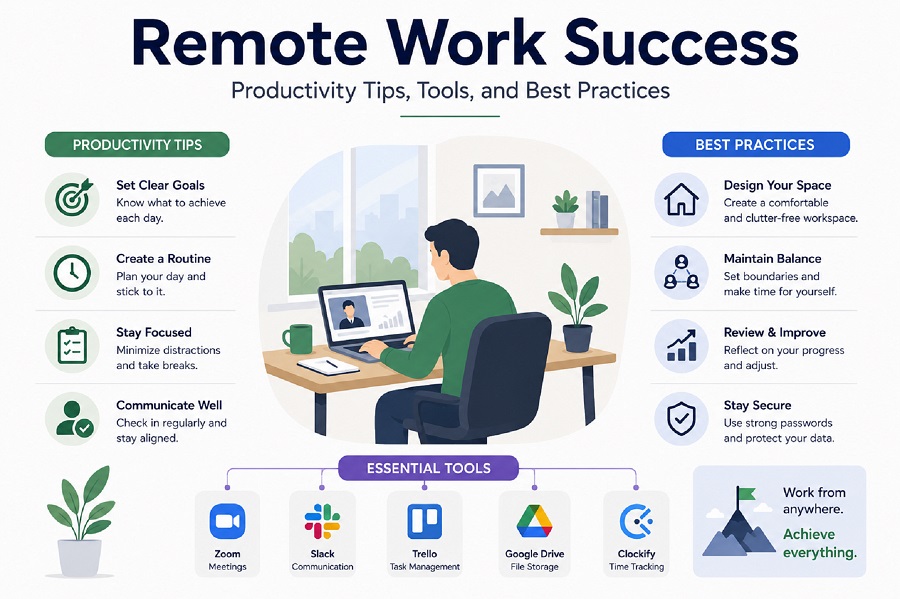
Remote work has transformed the modern workplace. What was once considered a flexible perk has become a standard working model for millions of professionals worldwide. Advances in technology, cloud computing, collaboration tools, and high-speed internet have enabled employees and businesses to work effectively from virtually anywhere.
While remote work offers numerous benefits, including flexibility, reduced commuting time, and improved work-life balance, it also presents challenges such as distractions, communication barriers, and maintaining productivity. Success in a remote environment requires discipline, planning, and the right tools.
This comprehensive guide explores the strategies, tools, and best practices that can help individuals and organizations thrive in remote work environments.
Understanding Remote Work
Remote work refers to performing professional duties outside a traditional office environment. Employees may work from:
- Home offices
- Co-working spaces
- Coffee shops
- Shared workspaces
- Any location with internet access
Remote work can be:
Fully Remote
Employees work entirely outside the office.
Hybrid Remote
Employees split time between home and office.
Flexible Remote
Employees choose their preferred work location.
Benefits of Remote Work
Improved Work-Life Balance
Remote work often provides greater flexibility, allowing employees to better manage personal and professional responsibilities.
Reduced Commuting Time
Eliminating daily commutes saves time, reduces stress, and lowers transportation costs.
Increased Productivity
Many employees report higher productivity due to fewer workplace interruptions.
Cost Savings
Both employees and employers can reduce expenses related to office space, transportation, meals, and work attire.
Access to Global Talent
Businesses can hire skilled professionals regardless of geographic location.
Challenges of Remote Work
Despite its advantages, remote work comes with unique challenges.
Communication Difficulties
Without face-to-face interaction, misunderstandings can occur more frequently.
Isolation
Remote workers may experience loneliness due to limited social interaction.
Distractions at Home
Family members, household chores, and entertainment can impact productivity.
Work-Life Boundaries
Some employees struggle to disconnect from work, leading to burnout.
Technical Issues
Internet outages and software problems can disrupt workflow.
Understanding these challenges is the first step toward overcoming them.
Creating an Effective Home Office
A dedicated workspace significantly improves productivity.
Choose a Quiet Location
Select an area with minimal distractions and noise.
Invest in Ergonomic Furniture
Proper equipment helps prevent discomfort and long-term health issues.
Recommended items include:
- Adjustable chair
- Supportive desk
- External monitor
- Keyboard and mouse
Optimize Lighting
Natural light improves focus and reduces eye strain.
Maintain Organization
A clean workspace promotes concentration and efficiency.
Developing a Productive Daily Routine
Routine creates structure and consistency.
Start with a Morning Routine
Successful remote workers often begin the day with:
- Exercise
- Reading
- Planning
- Meditation
Set Working Hours
Establish consistent start and finish times.
Take Scheduled Breaks
Regular breaks improve focus and reduce fatigue.
End the Day Properly
Create a shutdown routine that signals the end of work.
Time Management Strategies
Effective time management is essential for remote success.
Time Blocking
Divide the day into dedicated blocks for specific tasks.
Example:
- 9:00–11:00 Content creation
- 11:00–12:00 Meetings
- 1:00–3:00 Project work
- 3:00–4:00 Communication
The Pomodoro Technique
Work for 25 minutes followed by a short break.
Benefits include:
- Improved focus
- Reduced mental fatigue
- Better task completion
Prioritize Important Tasks
Focus on high-impact activities first.
Many professionals use:
- Eisenhower Matrix
- ABC Prioritization
- Daily Top 3 Tasks
Communication Best Practices
Strong communication is critical in remote environments.
Overcommunicate When Necessary
Provide updates regularly to ensure alignment.
Use Appropriate Channels
Different situations require different communication methods.
Examples:
- Email for formal communication
- Messaging apps for quick questions
- Video calls for discussions
Document Important Decisions
Written records reduce confusion and improve accountability.
Be Responsive
Timely responses support collaboration and trust.
Essential Remote Work Tools
Technology powers successful remote work.
Communication Tools
Common solutions include:
- Video conferencing software
- Team chat platforms
- Voice communication systems
Project Management Tools
These help organize tasks and deadlines.
Features often include:
- Task tracking
- Team collaboration
- Progress monitoring
Cloud Storage
Cloud platforms allow secure access to files from anywhere.
Benefits include:
- Real-time collaboration
- Automatic backups
- Version control
Productivity Tools
Examples include:
- Note-taking applications
- Calendar software
- Time-tracking systems
Managing Remote Meetings
Virtual meetings are a key component of remote work.
Prepare an Agenda
Clearly define objectives before the meeting.
Start and End on Time
Respect participants’ schedules.
Encourage Participation
Give team members opportunities to contribute.
Record Key Decisions
Document action items and responsibilities.
Avoid Meeting Overload
Not every discussion requires a meeting.
Maintaining Work-Life Balance
One of the biggest challenges in remote work is avoiding burnout.
Create Physical Separation
Use a dedicated workspace whenever possible.
Set Clear Boundaries
Communicate working hours to family and colleagues.
Take Time Off
Vacations and breaks remain important even when working remotely.
Prioritize Health
Focus on:
- Sleep
- Nutrition
- Exercise
- Mental wellness
Staying Motivated While Working Remotely
Motivation can fluctuate without direct supervision.
Set Goals
Define daily, weekly, and monthly objectives.
Track Progress
Celebrate achievements and milestones.
Continue Learning
Invest in professional development through:
- Online courses
- Certifications
- Industry publications
Connect with Others
Maintain relationships through virtual networking and team activities.
Cybersecurity for Remote Workers
Remote work increases security responsibilities.
Use Strong Passwords
Create unique passwords for each account.
Enable Multi-Factor Authentication
MFA provides additional protection.
Secure Wi-Fi Networks
Avoid unsecured public networks when handling sensitive information.
Update Software Regularly
Security updates help prevent vulnerabilities.
Backup Important Data
Maintain regular backups to reduce risk.
Remote Team Collaboration
Organizations must foster collaboration despite physical distance.
Encourage Transparency
Share updates and information openly.
Establish Expectations
Clearly define roles and responsibilities.
Promote Team Culture
Virtual events and recognition programs strengthen engagement.
Focus on Results
Measure performance based on outcomes rather than hours worked.
Leadership in Remote Teams
Managers play a critical role in remote success.
Build Trust
Avoid excessive micromanagement.
Provide Support
Ensure employees have necessary resources.
Communicate Frequently
Regular check-ins maintain alignment.
Recognize Achievements
Celebrate accomplishments and contributions.
Future Trends in Remote Work
Remote work continues to evolve.
Hybrid Models
Many companies are adopting flexible hybrid arrangements.
Artificial Intelligence
AI will assist with:
- Scheduling
- Task management
- Communication
- Productivity analysis
Virtual Reality Workspaces
Immersive collaboration environments may become more common.
Global Workforce Expansion
Businesses will increasingly recruit talent worldwide.
Common Remote Work Mistakes
Multitasking Excessively
Switching between tasks reduces efficiency.
Ignoring Breaks
Continuous work can lead to fatigue.
Poor Communication
Lack of updates creates confusion.
Working Without a Schedule
Unstructured days often reduce productivity.
Neglecting Health
Physical and mental well-being directly impact performance.
Conclusion
Remote work offers tremendous opportunities for flexibility, productivity, and professional growth. However, success requires intentional effort, effective communication, proper tools, and strong self-discipline. By creating a productive workspace, managing time effectively, maintaining work-life balance, and embracing collaboration, remote professionals can achieve outstanding results.
As technology continues to evolve, remote work is likely to remain a permanent and influential part of the modern workplace. Individuals and organizations that adapt to this shift will be well-positioned for long-term success.
