

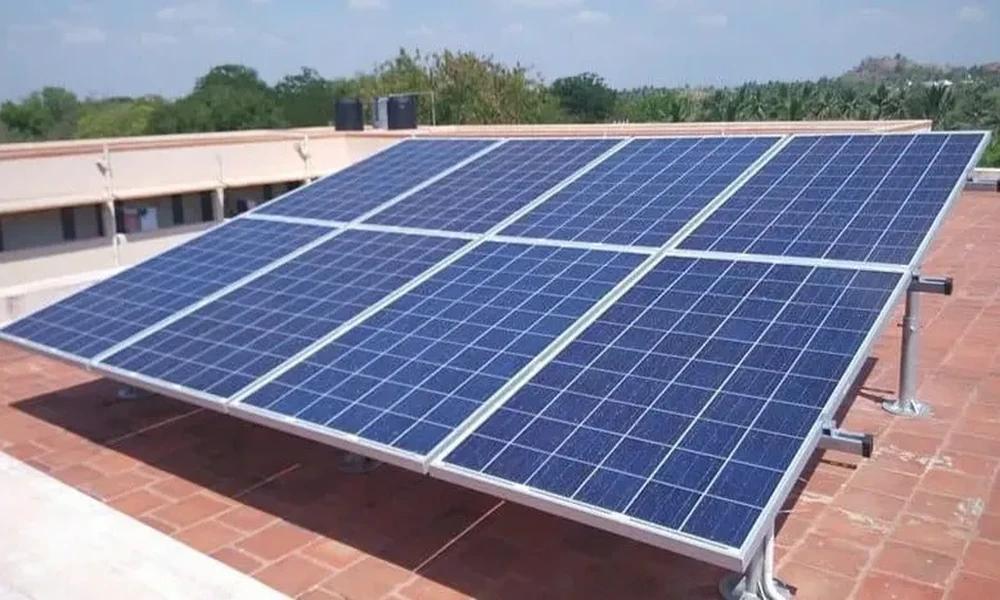
The solar adoption process for a business involves more moving parts than most owners anticipate when they first enquire. There is the financing decision, then the system design, then equipment procurement, then installation by a qualified EPC, then project management through commissioning, then post-installation monitoring to ensure the asset performs over its 25-year life. Each of these steps has its own complexity, its own set of vendors, and its own failure modes. When a business navigates them through separate, unconnected providers, the coordination burden, quality gaps, and information asymmetry between stages can erode the financial and operational benefit of going solar significantly before the first unit of clean energy is generated.
This fragmentation is one of the least-discussed inefficiencies in India’s solar market. The conversation is dominated by financing rates and system specifications. The quality of the end-to-end journey, and what it costs in time, stress, and suboptimal outcomes when that journey is poorly coordinated, receives considerably less attention. Solar finance solutions that address only the capital piece while leaving the rest of the journey unmanaged are solving one problem while leaving several others open.
What End-to-End Actually Means
Best solar financing for a business is not simply the lowest interest rate on a solar loan. It is a financing arrangement that is integrated with every other dimension of the solar project, so that the capital flows in step with project milestones, the installer is verified rather than self-selected by the borrower with no framework for quality assessment, the design is optimised by engineers with genuine solar expertise, and the asset is monitored after commissioning to ensure the savings projection on which the financing was premised is actually being achieved.
The practical value of this integration is substantial. Consider what happens when these elements are not connected. A business secures financing independently, selects an installer from an online directory, receives a system design from the installer’s in-house team with no independent review, and commissions the system with no monitoring platform in place. At each step, the absence of verification creates risk. The installer may be competent or may not. The design may be optimised or may be oversized to increase the installer’s margin. The system may perform at its designed output or may underperform silently for months.
The Design Problem That Financing Rarely Solves
System design is the step in financing solar projects where the most value is either created or destroyed, and it is the step that most financing arrangements do not engage with at all. A system that is incorrectly sized relative to the business’s consumption profile either under-delivers savings, because it is too small, or generates more electricity than the business can use, because it is too large, reducing the financial return in either case.
Optimal system design requires:
- Accurate load analysis based on actual consumption data, not estimates
- Site assessment that accounts for roof orientation, shading, structural load capacity, and panel layout constraints
- Inverter sizing that matches the panel configuration and the grid connection requirements of the local DISCOM
- Financial modelling that projects savings under realistic generation assumptions, not best-case scenarios
A best solar loan companies comparison that ignores the design quality embedded in the overall package is comparing the wrong variable. The loan that funds a well-designed, well-installed, and well-monitored system delivers a better financial outcome than the marginally cheaper loan that funds a system with none of those qualities.
Quality Assurance as a Financial Protection
The business taking a solar loan is making a financial commitment based on a savings projection. If the system underperforms, the savings do not materialise, but the loan repayment does. Quality assurance at the installation stage, through verified EPCs selected against defined performance criteria, protects the borrower’s interest as directly as the loan terms themselves.
Financing solar projects through a platform that maintains a verified EPC network, conducts quality checks at defined project milestones, and provides a structured escalation path when installation standards are not met is protecting the borrower’s investment in a way that a financing-only provider cannot.
The Monitoring Dimension That Completes the Picture
Post-installation monitoring is the final component that makes best solar financing genuinely complete rather than merely adequate. A platform that provides real-time generation tracking, savings reporting, smart diagnostics for developing faults, and alerts when output falls below expected levels ensures that the business can hold its installer accountable for system performance over the life of the asset, not just at the point of commissioning.
The combination of verified installation, optimal design, and active monitoring converts a solar investment from a one-time transaction into a managed, accountable energy asset whose performance is visible, trackable, and protectable across every year of its operational life.
