

Technology has transformed human civilization more rapidly in the past few decades than at any other period in history. From the invention of the internet and smartphones to cloud computing and artificial intelligence, innovation continues to reshape how people live, work, communicate, and conduct business.
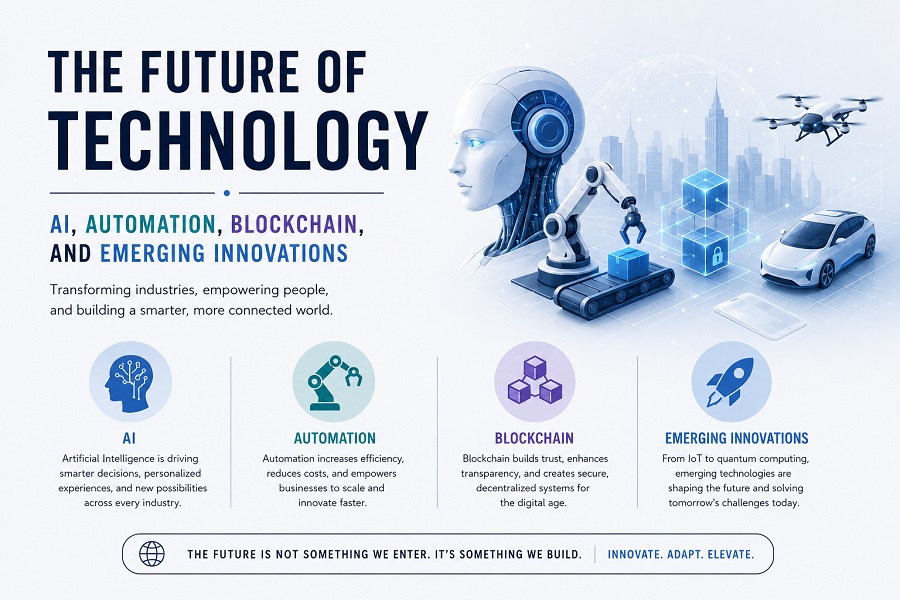
As we move deeper into the digital era, emerging technologies are creating new opportunities while also presenting new challenges. Artificial intelligence, automation, blockchain, quantum computing, biotechnology, and advanced robotics are expected to redefine industries and influence daily life in unprecedented ways.
This comprehensive guide explores the future of technology, major trends driving innovation, and how these advancements may impact businesses, economies, and society.
Understanding Technological Innovation
Technological innovation refers to the development and application of new tools, systems, processes, and solutions that improve efficiency, productivity, and quality of life.
Innovation typically occurs through:
- Scientific research
- Engineering advancements
- Market demand
- Digital transformation
- Global collaboration
Throughout history, major technological shifts have driven economic growth and societal change.
The Rise of Artificial Intelligence
Artificial Intelligence (AI) is among the most influential technologies of the modern age.
AI enables machines to perform tasks that traditionally require human intelligence.
Applications of AI
Current applications include:
- Virtual assistants
- Search engines
- Medical diagnostics
- Fraud detection
- Recommendation systems
- Autonomous vehicles
Benefits of AI
AI offers several advantages:
- Increased efficiency
- Improved decision-making
- Enhanced productivity
- Cost reduction
- Better customer experiences
Generative AI
Generative AI can create:
- Text
- Images
- Audio
- Videos
- Software code
Businesses increasingly use generative AI for content creation, automation, and customer engagement.
Future Potential
Future AI systems may become:
- More accurate
- More personalized
- More autonomous
- More integrated into everyday life
Automation and the Future of Work
Automation involves using technology to perform repetitive or complex tasks with minimal human intervention.
Types of Automation
Industrial Automation
Used in manufacturing and production facilities.
Business Process Automation
Automates:
- Data entry
- Scheduling
- Reporting
- Customer support
Intelligent Automation
Combines AI and automation to perform advanced decision-making tasks.
Benefits
Automation can:
- Reduce costs
- Improve efficiency
- Minimize errors
- Increase productivity
Workforce Implications
While automation may replace certain repetitive jobs, it is also expected to create new opportunities in:
- Technology
- Data science
- Engineering
- AI development
- Cybersecurity
Continuous learning and skill development will remain essential.
Blockchain Technology
Blockchain is a decentralized digital ledger that records transactions securely and transparently.
Key Characteristics
- Transparency
- Security
- Immutability
- Decentralization
Applications Beyond Cryptocurrency
Blockchain technology is increasingly used for:
Supply Chain Management
Improves transparency and traceability.
Healthcare
Secures patient records and data sharing.
Financial Services
Facilitates faster and more secure transactions.
Digital Identity Verification
Enhances online security and authentication.
Future Outlook
Blockchain may play a significant role in digital trust and secure information management.
Quantum Computing
Quantum computing represents a major leap beyond traditional computing.
How It Differs
Traditional computers use bits.
Quantum computers use qubits, allowing them to process information differently.
Potential Applications
- Drug discovery
- Climate modeling
- Financial analysis
- Cryptography
- Scientific research
Challenges
Current limitations include:
- High costs
- Technical complexity
- Error correction challenges
Despite obstacles, quantum computing holds enormous long-term potential.
The Internet of Things (IoT)
The Internet of Things refers to interconnected devices that communicate through the internet.
Examples include:
- Smart thermostats
- Wearable devices
- Connected vehicles
- Smart appliances
Benefits
IoT enables:
- Real-time monitoring
- Increased efficiency
- Predictive maintenance
- Improved convenience
Future Growth
Billions of connected devices are expected to be deployed worldwide in the coming years.
Smart Cities
Technology is transforming urban environments.
Smart City Components
Include:
- Intelligent transportation systems
- Smart energy grids
- Digital public services
- Environmental monitoring
Benefits
Smart cities can improve:
- Traffic management
- Public safety
- Resource efficiency
- Quality of life
Robotics and Automation
Robotics continues to evolve rapidly.
Industrial Robots
Used in:
- Manufacturing
- Logistics
- Warehousing
Service Robots
Examples include:
- Customer service assistants
- Delivery robots
- Medical robots
Future Possibilities
Advanced robotics may support:
- Elder care
- Disaster response
- Space exploration
- Precision agriculture
Biotechnology and Healthcare Innovation
Technology is revolutionizing healthcare.
Personalized Medicine
Treatments can be tailored to individual genetic profiles.
Gene Editing
Advanced techniques may help address inherited diseases.
Wearable Health Devices
Track:
- Heart rate
- Sleep patterns
- Activity levels
AI-Assisted Diagnostics
Improve detection and treatment planning.
Future Impact
Healthcare may become:
- More preventive
- More personalized
- More accessible
Cybersecurity in a Digital Future
As technology advances, cybersecurity becomes increasingly important.
Emerging Threats
Include:
- AI-powered attacks
- Ransomware
- Data breaches
- Identity theft
Security Innovations
Organizations are investing in:
- Zero-trust architecture
- Biometric authentication
- AI-powered threat detection
Strong cybersecurity practices will remain essential for individuals and businesses.
Virtual Reality and Augmented Reality
Immersive technologies continue to develop.
Virtual Reality (VR)
Creates fully digital environments.
Applications include:
- Gaming
- Training
- Education
- Simulation
Augmented Reality (AR)
Overlays digital information onto the physical world.
Applications include:
- Navigation
- Retail
- Maintenance
- Healthcare
Future Opportunities
Immersive technologies may transform communication and collaboration.
Cloud Computing
Cloud technology powers much of the modern digital economy.
Benefits
Cloud computing provides:
- Scalability
- Flexibility
- Cost efficiency
- Remote accessibility
Business Applications
Organizations use cloud services for:
- Data storage
- Software delivery
- Collaboration
- Analytics
Cloud adoption is expected to continue growing worldwide.
Sustainable Technology
Technology is increasingly focused on environmental sustainability.
Renewable Energy Innovations
Examples include:
- Solar power
- Wind energy
- Energy storage systems
Smart Energy Management
Technology helps optimize energy usage.
Sustainable Manufacturing
Advanced systems reduce waste and improve efficiency.
Environmental Monitoring
Sensors and AI assist in tracking environmental conditions.
The Future of Education
Technology continues transforming learning.
Online Learning
Provides flexible access to education.
AI-Powered Tutoring
Personalized instruction improves learning outcomes.
Virtual Classrooms
Enable global collaboration.
Skill-Based Learning
Technology supports continuous professional development.
Education will become increasingly accessible and customized.
Digital Transformation in Business
Organizations are embracing digital technologies to remain competitive.
Key Areas
Include:
- Automation
- Data analytics
- Cloud computing
- Customer experience
Benefits
Digital transformation helps businesses:
- Improve efficiency
- Reduce costs
- Increase agility
- Enhance innovation
Ethical Considerations
Technological advancement raises important ethical questions.
Privacy
Data collection requires responsible management.
Bias
AI systems must avoid unfair outcomes.
Transparency
Organizations should clearly explain technology usage.
Accountability
Developers and businesses must remain responsible for technological impacts.
Balancing innovation with ethics will be a major priority.
Skills Needed for the Future
Technology-driven economies require evolving skills.
Technical Skills
Examples include:
- Programming
- Data analysis
- Cybersecurity
- AI literacy
Human Skills
Remain equally important:
- Creativity
- Critical thinking
- Communication
- Leadership
- Problem-solving
Combining technical and interpersonal skills will provide significant advantages.
Challenges Facing Future Technology
Security Risks
Increasing connectivity expands attack surfaces.
Regulatory Concerns
Governments must establish effective frameworks.
Digital Inequality
Access to technology remains uneven globally.
Environmental Impact
Technology production and energy consumption require sustainable solutions.
Addressing these challenges is essential for long-term progress.
Predictions for the Next Decade
Experts anticipate growth in:
- Artificial Intelligence
- Automation
- Robotics
- Quantum Computing
- Biotechnology
- Renewable Energy
- Smart Cities
- Digital Finance
These innovations may fundamentally reshape industries and society.
How Individuals Can Prepare
To succeed in a technology-driven future:
Continue Learning
Develop new skills regularly.
Embrace Digital Literacy
Understand emerging technologies.
Adapt to Change
Flexibility improves long-term career resilience.
Focus on Lifelong Education
Continuous learning will become increasingly important.
Conclusion
The future of technology promises remarkable opportunities and transformative change. Artificial intelligence, automation, blockchain, quantum computing, biotechnology, and other emerging innovations are expected to revolutionize industries, improve productivity, and enhance quality of life.
While challenges related to ethics, security, regulation, and workforce adaptation remain important, responsible innovation can help maximize benefits while minimizing risks. Individuals, businesses, and governments that embrace technological progress while prioritizing sustainability and ethics will be best positioned to thrive in the digital future.
As technology continues to evolve, one thing remains certain: innovation will remain a powerful force shaping the world for generations to come.
