

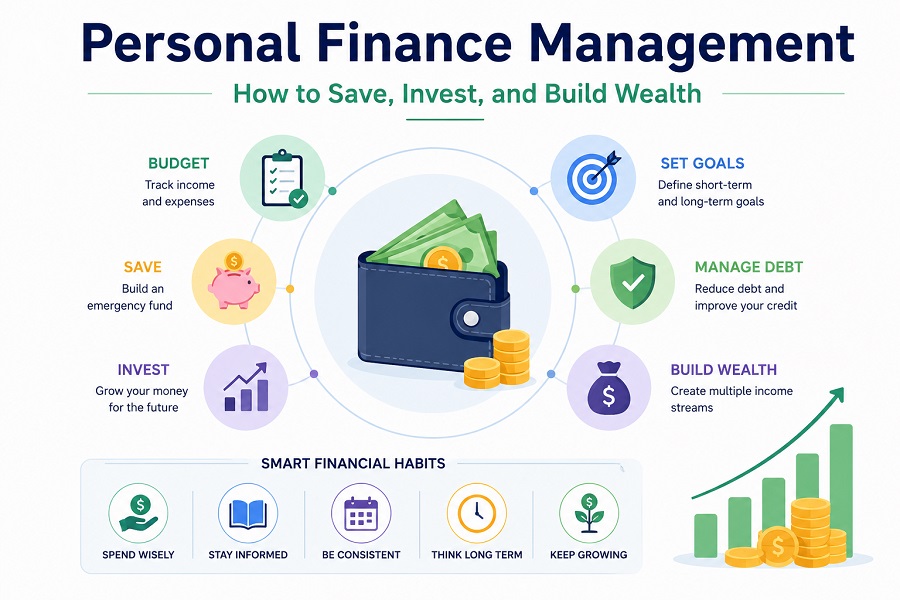
Personal finance management is one of the most important life skills, yet many people never receive formal education about money. Understanding how to manage income, control expenses, save consistently, invest wisely, and plan for the future can significantly improve financial security and quality of life.
Whether you are just starting your career, running a business, or planning for retirement, strong financial habits can help you achieve your goals and avoid unnecessary stress. This comprehensive guide covers the essential principles of personal finance and provides practical strategies for building long-term wealth.
What Is Personal Finance?
Personal finance refers to managing your money, including:
- Budgeting
- Saving
- Investing
- Debt management
- Insurance planning
- Tax planning
- Retirement preparation
The goal is to maximize financial stability while achieving both short-term and long-term objectives.
Why Personal Finance Matters
Effective money management helps individuals:
- Reduce financial stress
- Prepare for emergencies
- Build wealth over time
- Achieve major life goals
- Retire comfortably
- Improve overall financial freedom
Without a financial plan, even high-income earners can struggle with debt and financial insecurity.
Understanding Your Financial Situation
Before creating a financial plan, evaluate your current position.
Calculate Your Income
Include:
- Salary
- Business income
- Freelance earnings
- Rental income
- Investment income
Track Your Expenses
Common categories include:
- Housing
- Transportation
- Food
- Utilities
- Insurance
- Entertainment
- Education
- Healthcare
Tracking expenses reveals spending patterns and identifies opportunities to save money.
Determine Your Net Worth
Net Worth = Total Assets – Total Liabilities
Assets include:
- Savings accounts
- Investments
- Property
- Vehicles
Liabilities include:
- Loans
- Credit card debt
- Mortgages
Regularly monitoring net worth provides a clear picture of financial progress.
Creating a Budget
A budget is the foundation of personal finance management.
Benefits of Budgeting
- Controls spending
- Increases savings
- Prevents debt accumulation
- Supports financial goals
The 50/30/20 Rule
A popular budgeting strategy:
50% Needs
- Rent
- Utilities
- Groceries
- Transportation
30% Wants
- Dining out
- Entertainment
- Travel
20% Savings and Investments
- Emergency fund
- Retirement savings
- Investment accounts
This simple framework helps maintain financial balance.
Building an Emergency Fund
Unexpected expenses can occur at any time.
Examples include:
- Medical emergencies
- Job loss
- Vehicle repairs
- Home maintenance
How Much Should You Save?
Most financial experts recommend:
- Minimum: 3 months of expenses
- Ideal: 6–12 months of expenses
Where to Keep Emergency Savings
Choose safe and accessible options such as:
- Savings accounts
- High-interest savings accounts
- Money market accounts
Emergency funds should prioritize liquidity over high returns.
Managing Debt Effectively
Debt can either help or hinder financial progress.
Good Debt
Examples:
- Education loans
- Business loans
- Mortgages
These debts may contribute to future income growth.
Bad Debt
Examples:
- High-interest credit cards
- Unnecessary consumer loans
Bad debt often reduces financial flexibility.
Debt Repayment Strategies
Snowball Method
Pay smallest balances first.
Benefits:
- Quick psychological wins
- Increased motivation
Avalanche Method
Pay highest-interest debt first.
Benefits:
- Lower total interest costs
- Faster overall repayment
Choose the approach that best matches your financial behavior.
The Importance of Saving
Saving creates financial security and flexibility.
Short-Term Savings Goals
Examples:
- Vacation fund
- New vehicle
- Home renovation
Long-Term Savings Goals
Examples:
- Children’s education
- Retirement
- Home purchase
Automating savings contributions helps maintain consistency.
Understanding Investments
Saving preserves money, but investing helps grow wealth.
Why Investing Matters
Inflation reduces purchasing power over time.
Investments help:
- Generate returns
- Build wealth
- Achieve financial goals
- Outpace inflation
Common Investment Options
Stocks
Stocks represent ownership in companies.
Advantages:
- High growth potential
- Dividend income
Risks:
- Market volatility
Bonds
Bonds are loans to governments or corporations.
Advantages:
- Stable income
- Lower risk
Risks:
- Lower returns
Mutual Funds
Mutual funds pool money from multiple investors.
Advantages:
- Diversification
- Professional management
Exchange-Traded Funds (ETFs)
ETFs offer diversified portfolios with lower fees.
Advantages:
- Flexibility
- Broad market exposure
Real Estate
Property investments can generate:
- Rental income
- Capital appreciation
Risks include maintenance costs and market fluctuations.
Diversification
Diversification reduces investment risk.
Instead of investing in one asset, spread investments across:
- Stocks
- Bonds
- Real estate
- Cash equivalents
A diversified portfolio can better withstand market fluctuations.
Retirement Planning
Retirement planning should begin as early as possible.
Benefits of Early Investing
Compound growth allows investments to generate returns on previous returns.
Example:
Investing consistently over decades often produces significantly larger results than starting later.
Retirement Goals
Consider:
- Desired lifestyle
- Expected expenses
- Healthcare costs
- Inflation
Creating a retirement strategy early increases financial security.
Understanding Compound Interest
Compound interest is often called the most powerful force in investing.
Example
Investing $500 monthly with an average annual return of 8% over 30 years could potentially grow into a substantial portfolio due to compounding.
The earlier you start, the greater the long-term impact.
Tax Planning
Tax-efficient financial planning helps maximize wealth.
Strategies include:
- Utilizing retirement accounts
- Claiming eligible deductions
- Maintaining proper records
- Understanding local tax regulations
Professional tax advice may help optimize financial outcomes.
Insurance and Risk Management
Insurance protects against unexpected financial losses.
Important types include:
Health Insurance
Helps cover medical expenses.
Life Insurance
Provides financial support to dependents.
Disability Insurance
Protects income if unable to work.
Property Insurance
Protects homes and valuable assets.
Proper insurance planning is a critical component of financial security.
Common Financial Mistakes to Avoid
Living Beyond Your Means
Consistently spending more than you earn creates financial problems.
Ignoring Retirement Savings
Delaying retirement planning reduces the benefits of compounding.
Not Having an Emergency Fund
Unexpected expenses can force reliance on debt.
Emotional Investing
Making decisions based on fear or greed often produces poor outcomes.
Lack of Financial Education
Continuous learning improves decision-making and financial outcomes.
Building Long-Term Wealth
Successful wealth building usually follows these principles:
- Spend less than you earn.
- Maintain a budget.
- Eliminate high-interest debt.
- Build an emergency fund.
- Invest consistently.
- Diversify investments.
- Continue learning about finance.
- Remain patient and disciplined.
Wealth is generally created through consistent habits rather than quick wins.
Financial Goals for Different Life Stages
Young Adults
- Build savings habits
- Establish credit responsibly
- Begin investing
Families
- Increase emergency savings
- Purchase insurance
- Save for education
Mid-Career Professionals
- Maximize retirement contributions
- Diversify investments
- Reduce debt
Pre-Retirement
- Protect assets
- Review retirement plans
- Manage risk carefully
Each stage requires different priorities and strategies.
The Future of Personal Finance
Technology continues to transform financial management.
Emerging trends include:
- AI-powered budgeting tools
- Digital banking
- Automated investing
- Financial planning apps
- Cryptocurrency adoption
While technology improves convenience, strong financial fundamentals remain essential.
Conclusion
Personal finance management is the foundation of long-term financial success. By creating a budget, building an emergency fund, eliminating unnecessary debt, investing consistently, and planning for retirement, individuals can achieve greater financial security and independence.
Financial success rarely happens overnight. Instead, it results from consistent habits, informed decisions, and disciplined execution over time. The earlier you begin managing your finances effectively, the greater your opportunities to build lasting wealth and achieve your financial goals.
