

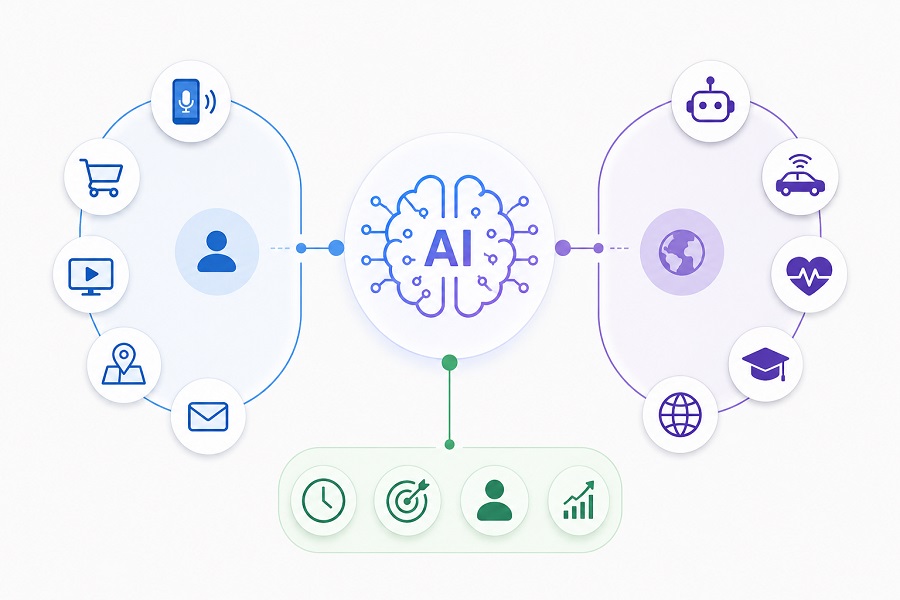
Artificial Intelligence (AI) has become one of the most transformative technologies of the modern era. What once seemed like science fiction is now a part of everyday life. From smartphones and virtual assistants to healthcare diagnostics and business automation, AI influences how people work, communicate, learn, and make decisions.
As AI continues to evolve, understanding its practical applications, benefits, challenges, and future potential becomes increasingly important. This guide explores how AI is shaping our daily lives and what we can expect in the years ahead.
What Is Artificial Intelligence?
Artificial Intelligence refers to computer systems designed to perform tasks that typically require human intelligence. These tasks include learning, problem-solving, decision-making, language understanding, and pattern recognition.
AI systems use large amounts of data and advanced algorithms to identify patterns and improve their performance over time. Machine learning, deep learning, and natural language processing are among the most common AI technologies used today.
Everyday Applications of AI
Virtual Assistants
Virtual assistants such as Siri, Google Assistant, and Alexa use AI to understand voice commands and provide useful responses. Users can set reminders, check weather forecasts, play music, and control smart home devices through simple voice interactions.
Smart Recommendations
AI powers recommendation engines on platforms such as Netflix, YouTube, Spotify, and online shopping websites. These systems analyze user behavior and preferences to suggest relevant content and products.
Email Management
Modern email services use AI to filter spam, categorize messages, and provide smart reply suggestions. This improves productivity and helps users manage large volumes of communication efficiently.
Navigation and Maps
GPS applications use AI to analyze traffic conditions, road closures, and user behavior to recommend the fastest routes. Real-time navigation has become significantly more accurate because of AI-powered systems.
Online Shopping
E-commerce platforms use AI for personalized recommendations, customer support chatbots, inventory management, and fraud detection.
AI in Healthcare
Healthcare is one of the most promising areas for AI implementation.
Disease Detection
AI systems can analyze medical images and identify signs of diseases such as cancer, pneumonia, and cardiovascular conditions.
Personalized Treatment
AI helps doctors develop customized treatment plans based on a patient’s medical history, genetics, and lifestyle factors.
Administrative Efficiency
Hospitals use AI to automate scheduling, billing, and record management, reducing administrative burdens and improving patient care.
Drug Discovery
Researchers utilize AI to analyze biological data and accelerate the development of new medications.
AI in Education
The education sector has embraced AI to improve learning experiences.
Personalized Learning
AI-driven learning platforms adapt educational content according to each student’s strengths and weaknesses.
Automated Assessment
Teachers can save time through AI-assisted grading systems and automated feedback mechanisms.
Virtual Tutors
AI-powered tutoring systems provide instant support and explanations for students learning complex subjects.
Accessibility Improvements
Speech recognition and translation technologies help make education more accessible to diverse learners.
AI in Business
Businesses increasingly rely on AI to improve efficiency and competitiveness.
Customer Service
Chatbots provide 24/7 support, answer common questions, and handle routine inquiries.
Data Analysis
AI processes large datasets quickly, enabling businesses to make informed decisions.
Marketing Optimization
Companies use AI to analyze consumer behavior and improve advertising performance.
Process Automation
Repetitive tasks such as data entry, scheduling, and reporting can be automated, allowing employees to focus on strategic work.
Benefits of Artificial Intelligence
Increased Efficiency
AI automates routine tasks, reducing manual effort and improving productivity.
Better Decision Making
Organizations can use AI-generated insights to make more informed decisions.
Cost Reduction
Automation reduces operational costs and improves resource allocation.
Enhanced Customer Experience
Personalized services and faster response times improve customer satisfaction.
Continuous Availability
Unlike humans, AI systems can operate around the clock without fatigue.
Challenges and Risks of AI
Privacy Concerns
AI systems often require large amounts of data, raising concerns about personal privacy and data security.
Job Displacement
Automation may replace certain roles, requiring workers to develop new skills.
Bias and Fairness
AI systems can inherit biases from training data, leading to unfair outcomes.
Security Risks
Cybercriminals may exploit AI technologies for malicious purposes.
Ethical Considerations
Society must establish guidelines to ensure responsible AI development and deployment.
Future Trends in Artificial Intelligence
Generative AI
AI systems capable of creating text, images, videos, and software code are expected to become increasingly sophisticated.
Autonomous Vehicles
Self-driving technologies continue to advance and may significantly change transportation.
Smart Cities
AI will help optimize traffic management, energy usage, and public services.
Advanced Healthcare Solutions
Predictive analytics and personalized medicine will continue to improve patient outcomes.
Human-AI Collaboration
Rather than replacing humans entirely, future AI systems will increasingly work alongside people to enhance productivity and creativity.
How Individuals Can Prepare for an AI-Powered Future
- Develop digital literacy skills.
- Learn basic AI concepts.
- Stay informed about technological developments.
- Focus on creativity and critical thinking.
- Continuously update professional skills.
Conclusion
Artificial Intelligence is transforming nearly every aspect of modern life. From healthcare and education to business and entertainment, AI offers significant opportunities to improve efficiency, innovation, and quality of life. While challenges related to privacy, ethics, and employment remain important considerations, responsible development and adoption can help maximize benefits while minimizing risks.
As AI continues to evolve, individuals and organizations that understand and embrace this technology will be better positioned to succeed in an increasingly digital world.
