

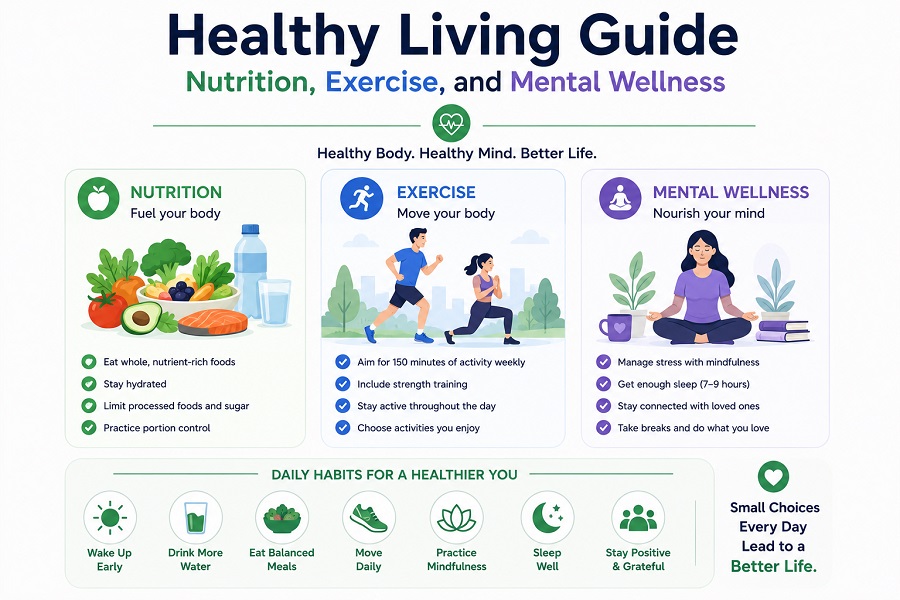
Healthy living is more than simply avoiding illness. It involves making daily choices that improve physical health, mental well-being, emotional balance, and overall quality of life. In today’s fast-paced world, maintaining a healthy lifestyle can seem challenging due to busy schedules, processed foods, stress, and sedentary habits.
However, adopting healthy habits does not require dramatic changes. Small, consistent improvements in nutrition, exercise, sleep, and mental wellness can produce significant long-term benefits. This comprehensive guide explores practical strategies for achieving and maintaining a healthier lifestyle.
What Is Healthy Living?
Healthy living is a holistic approach to well-being that focuses on:
- Balanced nutrition
- Regular physical activity
- Mental health
- Quality sleep
- Stress management
- Healthy relationships
- Preventive healthcare
The goal is to create sustainable habits that support long-term physical and emotional wellness.
Benefits of a Healthy Lifestyle
Maintaining healthy habits offers numerous advantages.
Physical Benefits
- Increased energy levels
- Stronger immune system
- Improved cardiovascular health
- Better weight management
- Reduced risk of chronic diseases
Mental Benefits
- Improved concentration
- Better memory
- Reduced anxiety
- Enhanced mood
- Greater emotional resilience
Long-Term Benefits
- Increased life expectancy
- Better quality of life
- Lower healthcare costs
- Improved productivity
Understanding Nutrition
Nutrition plays a central role in overall health.
The food you consume provides the nutrients your body needs to function effectively.
Essential Nutrients
Carbohydrates
Carbohydrates are the body’s primary source of energy.
Healthy sources include:
- Whole grains
- Fruits
- Vegetables
- Legumes
Proteins
Proteins support:
- Muscle growth
- Tissue repair
- Immune function
Good sources include:
- Fish
- Eggs
- Poultry
- Beans
- Lentils
- Dairy products
Healthy Fats
Healthy fats support:
- Brain health
- Hormone production
- Nutrient absorption
Sources include:
- Nuts
- Seeds
- Avocados
- Olive oil
Vitamins and Minerals
Micronutrients are essential for numerous bodily functions.
Consume a variety of colorful fruits and vegetables to obtain adequate vitamins and minerals.
Building a Balanced Diet
A balanced diet includes foods from all major food groups.
Fruits and Vegetables
Aim to fill half your plate with fruits and vegetables.
Benefits include:
- Fiber
- Antioxidants
- Vitamins
- Minerals
Whole Grains
Choose:
- Brown rice
- Oats
- Whole wheat bread
- Quinoa
Whole grains provide sustained energy and digestive benefits.
Lean Proteins
Focus on:
- Fish
- Chicken
- Turkey
- Legumes
- Tofu
Healthy Fats
Include moderate amounts of:
- Olive oil
- Nuts
- Seeds
- Fatty fish
Foods to Limit
Certain foods may negatively affect health when consumed excessively.
Added Sugars
Excess sugar consumption is associated with:
- Weight gain
- Diabetes
- Heart disease
Highly Processed Foods
Processed foods often contain:
- Excess sodium
- Artificial additives
- Unhealthy fats
Excessive Salt
Too much sodium may contribute to:
- High blood pressure
- Cardiovascular disease
Sugary Beverages
Limit:
- Soft drinks
- Energy drinks
- Sweetened juices
Importance of Hydration
Water is essential for nearly every bodily function.
Benefits include:
- Temperature regulation
- Nutrient transport
- Joint lubrication
- Improved digestion
Hydration Tips
- Carry a reusable water bottle
- Drink water throughout the day
- Increase intake during exercise
- Monitor urine color as a hydration indicator
Understanding Physical Activity
Regular exercise is a cornerstone of healthy living.
Physical activity benefits:
- Heart health
- Muscle strength
- Mental well-being
- Weight management
Types of Exercise
Cardiovascular Exercise
Examples include:
- Walking
- Running
- Swimming
- Cycling
Benefits:
- Improved heart health
- Increased endurance
- Better calorie burning
Strength Training
Examples include:
- Weightlifting
- Resistance bands
- Bodyweight exercises
Benefits:
- Increased muscle mass
- Improved metabolism
- Stronger bones
Flexibility Training
Examples include:
- Stretching
- Yoga
- Mobility exercises
Benefits:
- Reduced injury risk
- Improved posture
- Better movement quality
Balance Exercises
Particularly important for older adults.
Examples include:
- Tai Chi
- Single-leg stands
- Stability exercises
Creating an Exercise Routine
Set Realistic Goals
Examples:
- Walk 30 minutes daily
- Exercise three times weekly
- Improve flexibility
Start Slowly
Gradual progression reduces injury risk and improves consistency.
Find Activities You Enjoy
Enjoyable activities are easier to maintain long term.
Schedule Workouts
Treat exercise as an important appointment.
Weight Management
Healthy weight management focuses on sustainable habits rather than quick fixes.
Key Principles
- Balanced nutrition
- Regular exercise
- Adequate sleep
- Stress management
Avoid Extreme Diets
Many fad diets are difficult to maintain and may lead to nutrient deficiencies.
Sleep and Recovery
Sleep is often overlooked but critically important.
Benefits of Quality Sleep
- Improved memory
- Better immune function
- Enhanced mood
- Faster recovery
Sleep Recommendations
Most adults require:
- 7 to 9 hours of sleep per night
Improving Sleep Quality
- Maintain a consistent schedule
- Limit screen time before bed
- Create a comfortable sleep environment
- Avoid heavy meals late at night
Mental Wellness
Mental health is a fundamental component of overall wellness.
Importance of Mental Health
Strong mental health supports:
- Productivity
- Relationships
- Decision-making
- Emotional stability
Common Mental Health Challenges
- Anxiety
- Stress
- Depression
- Burnout
Early recognition and support are important.
Managing Stress Effectively
Stress is a normal part of life but chronic stress can negatively affect health.
Physical Effects of Stress
- Increased blood pressure
- Sleep disturbances
- Digestive issues
- Fatigue
Stress Management Techniques
Meditation
Meditation promotes relaxation and focus.
Deep Breathing
Controlled breathing can reduce stress responses.
Physical Activity
Exercise naturally reduces stress hormones.
Time Management
Organized schedules reduce overwhelm and improve productivity.
Building Healthy Habits
Long-term success comes from consistency rather than perfection.
Habit Formation Tips
- Start small
- Track progress
- Set reminders
- Reward achievements
Focus on Sustainability
Choose habits you can maintain for years rather than weeks.
Preventive Healthcare
Regular health screenings help identify issues early.
Common Preventive Measures
- Annual checkups
- Blood pressure monitoring
- Cholesterol testing
- Vaccinations
- Dental care
Early detection often leads to better outcomes.
Healthy Relationships
Social connections significantly influence health.
Benefits of Strong Relationships
- Emotional support
- Reduced stress
- Improved mental health
- Greater life satisfaction
Relationship Building Tips
- Communicate openly
- Spend quality time together
- Practice empathy
- Resolve conflicts respectfully
Healthy Living at Different Life Stages
Children and Teenagers
Focus on:
- Balanced nutrition
- Physical activity
- Healthy sleep habits
Adults
Prioritize:
- Stress management
- Exercise consistency
- Preventive healthcare
Older Adults
Emphasize:
- Mobility
- Strength training
- Social engagement
- Fall prevention
Common Healthy Living Myths
Myth: Healthy Living Requires Expensive Foods
Many nutritious foods are affordable and accessible.
Myth: Exercise Must Be Intense
Moderate activity provides substantial health benefits.
Myth: Healthy Eating Means Eliminating Favorite Foods
Balance and moderation are often more sustainable.
Myth: Results Should Be Immediate
Meaningful health improvements often require patience and consistency.
Technology and Healthy Living
Modern technology can support healthier habits.
Fitness Apps
Track:
- Steps
- Workouts
- Calories
Wearable Devices
Monitor:
- Heart rate
- Activity levels
- Sleep patterns
Online Health Resources
Educational content can improve health literacy and motivation.
Future Trends in Health and Wellness
Emerging developments include:
- Personalized nutrition
- AI-powered health coaching
- Wearable health monitoring
- Telemedicine
- Advanced fitness technology
These innovations may help individuals manage health more effectively.
Creating a Personal Wellness Plan
Step 1: Assess Your Current Habits
Evaluate:
- Diet
- Exercise
- Sleep
- Stress levels
Step 2: Set Goals
Examples:
- Lose weight
- Improve fitness
- Sleep better
Step 3: Develop Action Steps
Create specific, measurable strategies.
Step 4: Track Progress
Regular monitoring increases accountability.
Step 5: Adjust as Needed
Flexibility helps maintain long-term success.
Conclusion
Healthy living is a lifelong journey rather than a destination. By focusing on balanced nutrition, regular exercise, quality sleep, mental wellness, and preventive healthcare, individuals can significantly improve their overall well-being.
The most effective approach involves making small, sustainable changes that become lasting habits. Over time, these positive choices can lead to greater energy, improved health, enhanced happiness, and a higher quality of life. Regardless of age or current fitness level, it is never too late to begin building a healthier future.
