

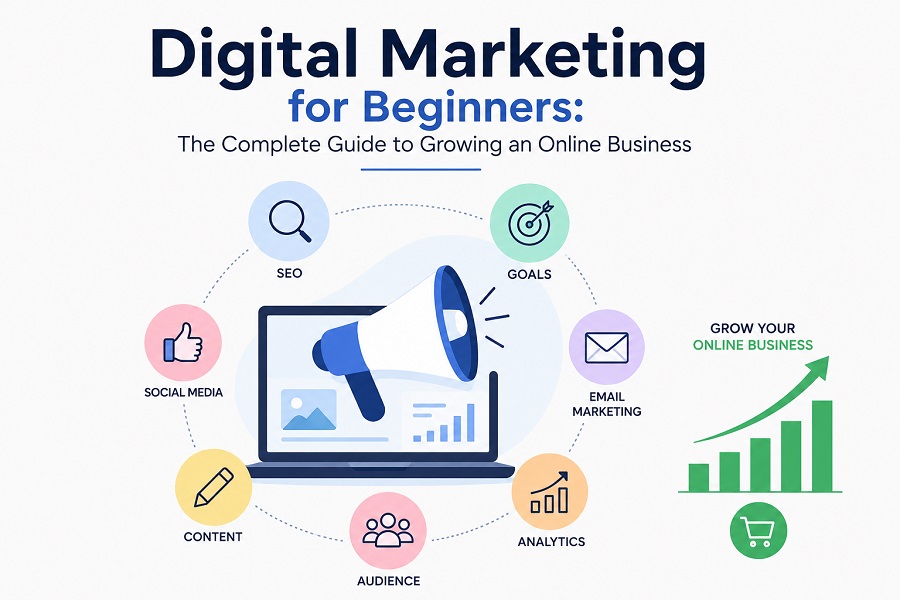
Digital marketing has become one of the most important business strategies in the modern world. Whether you run a small local business, an eCommerce store, a blog, or a multinational company, digital marketing helps you reach customers, increase brand awareness, and generate sales.
Unlike traditional marketing methods, digital marketing allows businesses to target specific audiences, measure results accurately, and optimize campaigns in real time. This guide explains everything beginners need to know about digital marketing and how to build a successful online presence.
What Is Digital Marketing?
Digital marketing refers to promoting products, services, or brands through online channels. These channels include:
- Search engines
- Websites
- Social media platforms
- Email marketing
- Mobile applications
- Online advertising
- Video platforms
The primary goal is to connect with potential customers where they spend most of their time: online.
Why Digital Marketing Matters
Digital marketing offers several advantages over traditional marketing:
Global Reach
Businesses can reach customers around the world without requiring physical locations.
Cost-Effective
Many digital marketing strategies are affordable compared to television, radio, or print advertising.
Measurable Results
Marketers can track clicks, conversions, traffic, and sales using analytics tools.
Better Targeting
Businesses can focus on specific demographics, interests, behaviors, and locations.
Higher Engagement
Digital channels allow direct interaction with customers through comments, messages, and feedback.
Core Components of Digital Marketing
Search Engine Optimization (SEO)
SEO is the process of improving a website’s visibility in search engine results.
Benefits of SEO include:
- Increased organic traffic
- Higher credibility
- Better user experience
- Long-term growth
Important SEO factors include:
Keyword Research
Identify search terms your audience uses.
Examples:
- best laptops for students
- how to start a blog
- digital marketing guide
On-Page SEO
Optimize:
- Titles
- Meta descriptions
- Headings
- Images
- Internal links
- Content quality
Technical SEO
Improve:
- Site speed
- Mobile responsiveness
- Security
- Crawlability
Link Building
Earn backlinks from reputable websites.
Content Marketing
Content marketing focuses on creating valuable information that attracts and educates audiences.
Types of Content
- Blog posts
- Videos
- Infographics
- Podcasts
- Case studies
- E-books
- Guides
Benefits
Quality content helps:
- Build trust
- Improve SEO
- Generate leads
- Increase conversions
Content Creation Process
- Research audience needs.
- Find target keywords.
- Create helpful content.
- Optimize for SEO.
- Promote through multiple channels.
Social Media Marketing
Social media platforms allow businesses to connect directly with customers.
Popular platforms include:
Suitable for:
- Community building
- Advertising
- Customer support
Effective for:
- Visual branding
- Influencer marketing
- Product promotion
Ideal for:
- B2B marketing
- Professional networking
- Lead generation
YouTube
Excellent for:
- Tutorials
- Product reviews
- Educational content
Useful for:
- Lifestyle brands
- Home improvement
- Fashion
- DIY projects
Email Marketing
Email marketing remains one of the highest ROI digital marketing channels.
Benefits
- Direct communication
- Customer retention
- Sales promotion
- Relationship building
Effective Email Campaigns
Include:
- Welcome emails
- Newsletters
- Promotional campaigns
- Product updates
- Re-engagement emails
Best Practices
- Personalize messages
- Use compelling subject lines
- Optimize for mobile devices
- Test different formats
Pay-Per-Click Advertising (PPC)
PPC allows businesses to pay for targeted traffic.
Popular platforms include:
- Google Ads
- Facebook Ads
- Instagram Ads
- LinkedIn Ads
Advantages
- Immediate traffic
- Precise targeting
- Measurable performance
- Flexible budgets
PPC Metrics
Monitor:
- Click-through rate (CTR)
- Cost per click (CPC)
- Conversion rate
- Return on ad spend (ROAS)
Affiliate Marketing
Affiliate marketing involves promoting products and earning commissions from sales.
Benefits
- Low startup cost
- Passive income potential
- Scalable business model
Popular Affiliate Categories
- Technology
- Finance
- Travel
- Health
- Education
Influencer Marketing
Influencers help brands reach established audiences.
Types of Influencers
Nano Influencers
1,000–10,000 followers
Micro Influencers
10,000–100,000 followers
Macro Influencers
100,000–1 million followers
Mega Influencers
Over 1 million followers
Many businesses achieve better engagement with smaller influencers who have highly targeted audiences.
Conversion Rate Optimization (CRO)
Traffic alone is not enough. Businesses must convert visitors into customers.
CRO Strategies
- Improve website speed
- Simplify navigation
- Enhance call-to-action buttons
- Use customer testimonials
- Reduce checkout friction
Analytics and Data Tracking
Digital marketing success depends on data analysis.
Important Metrics
- Website traffic
- Bounce rate
- Average session duration
- Conversion rate
- Revenue
Useful Tools
- Google Analytics
- Google Search Console
- Heatmap software
- SEO tools
Creating a Digital Marketing Strategy
Step 1: Define Goals
Examples:
- Increase traffic by 50%
- Generate 100 leads per month
- Improve sales by 20%
Step 2: Understand Your Audience
Identify:
- Age
- Gender
- Interests
- Problems
- Buying behavior
Step 3: Select Channels
Focus on platforms where your audience spends time.
Step 4: Create Content
Develop a content calendar and publishing schedule.
Step 5: Measure Results
Analyze performance regularly and make improvements.
Common Digital Marketing Mistakes
Ignoring SEO
Many businesses focus only on paid advertising and neglect organic growth.
Publishing Low-Quality Content
Thin content rarely ranks well or attracts customers.
Lack of Consistency
Success requires regular content creation and promotion.
Not Tracking Results
Without data, improvement becomes difficult.
Poor Mobile Experience
Mobile users represent a significant portion of online traffic.
Future of Digital Marketing
Emerging trends include:
- Artificial Intelligence
- Voice Search Optimization
- Video Marketing
- Personalized Experiences
- Marketing Automation
- Interactive Content
- Short-Form Video
Businesses that adapt to these trends will maintain competitive advantages.
Conclusion
Digital marketing offers powerful opportunities for businesses of all sizes. By combining SEO, content marketing, social media, email campaigns, paid advertising, and analytics, organizations can attract customers and grow sustainably. Beginners should focus on learning one channel at a time while continuously measuring and improving results. Over time, a well-executed digital marketing strategy can become one of the most valuable assets for any business.
